A transitional fossil between fish and amphibians.
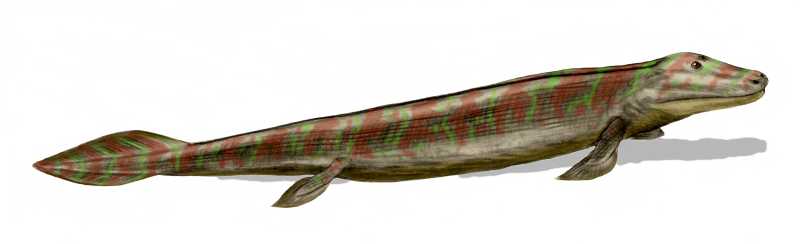
Tiktaalik (pronounced /tɪkˈtaːlɪk/) is a genus of extinct sarcopterygian (lobe-finned) fish from the late Devonian period, with many features akin to those of tetrapods (four-legged animals).[1] It is an example from several lines of ancient sarcopterygian fish developing adaptations to the oxygen-poor shallow-water habitats of its time,[2] which led to the evolution of amphibians. Well-preserved fossils were found in 2004 on Ellesmere Island in Nunavut, Canada.Tiktaalik lived approximately 375 million years ago. Paleontologists suggest that it was an intermediate form between fish such as Panderichthys, which lived about 380 million years ago, and early tetrapods such as Acanthostega and Ichthyostega, which lived about 365 million years ago. Its mixture of fish and tetrapod characteristics led one of its discoverers, Neil Shubin, to characterize Tiktaalik as a "fishapod" [3][4].
Labels: transitional fossils
posted by Eupraxsopher at
12:42 PM


0 Comments:
Post a Comment
<< Home