Sunday, September 21, 2008

Should tax-exempt churches influence elections?

This is a interesting comment on the erosion of church and state in American politics:

A push for politics in the pulpit

Comments (30)
By Henry Champ

The founding fathers of the United States understood the need for a clear separation of church and state. They even wrote the principle into the U.S. Constitution, hoping to prevent the terrible problems they'd seen when the walls between religion and government were erased in Europe.

Then, 54 years ago, Congress went further. They passed a law that banned political endorsements by tax-exempt houses of worship.

It was not designed as a punishment. The rules were set in place to distinguish between religious, educational and charitable institutions – which are entitled to tax exemptions – and political organizations, which are not.

The law was clear. Tax-exempt entities may not "participate in, or intervene in … any political campaign on behalf of any candidate for public office."

The law has been tested in the courts many times. It has always been upheld.

Most of these cases came as a result of allegations that some preachers crossed the line.

There have also been efforts in Congress to repeal the law, although they must be described as half-hearted, given that so many lawmakers owe a considerable debt to one religious organization or another. Such efforts have never found significant public support.

Now, there is a new and altogether different challenge.

Pulpit Freedom Sunday

The Alliance Defence Fund, based in Arizona, has organized a head-on confrontation. Arguing that clergy have the constitutional right to endorse candidates, the ADF is promoting Pulpit Freedom Sunday. So far, several dozen conservative pastors from 20 states have agreed that on Sunday, Sept. 28, they will endorse candidates and political parties during their sermons.

"Many Americans' attitudes and actions toward slavery, child labour, civil rights and even the American revolution itself started in the pews of the nation's churches," the ADF says in its press release. "As pastors preached and taught biblical principles related to those issues and evaluated the politicians who promoted or decried them, their parishioners could decide their own stance in light of the scripture. Starting in 1954, that most basic right was ripped away from our pulpits."

ADF attorney Erik Stanley added: "For so long there has been this cloud of intimidation over the church.… It is the job of the pastors of America to debate the proper role of church in society."

Not everyone agrees.

A group called Americans United For Separation of Church and State is fighting back. Their spokesman, Joe Conn, describes Pulpit Freedom Sunday as a "stunt" and says the event is part of an effort by the religious right to build a church network that will put their candidates into office.

Two Ohio-based pastors have also called for hundreds of clergy nationwide to preach on Sept. 21 about the value of the separation of church and state. Their lawyer, former IRS official Marcus S. Owens, has urged the IRS to investigate ADF lawyers for "actively advising churches and pastors that they should violate the tax law and offering to explain how to do that.

"The tax system," he continues, "would be shut down if you allowed attorneys to counsel people on how to violate the tax law."

Uncle Sam's quandary

This is a big part of the problem. What does the government do the morning after if 50 or so pastors have ignored the law, figuratively giving the finger to Washington?

There is no question the ADF is counting on some cover from the Bush administration, which has urged faith-based organizations to take a greater public role. Then there are those congressmen and women who have trumpeted their connection to the religious right. And the ADF certainly would be hoping that the more conservative Supreme Court may help.

Yet it's hard to believe the Supreme Court would overturn the IRS ruling. There are the daily examples of abuse by religious leaders who impose orthodoxy through the power of government in Iran, Saudi Arabia and Pakistan.

And if churches, any churches, got their hooks any deeper into elected officials in Washington, can you imagine the effect on social issues, such as sex education, the teaching of creationism in schools, the blockades of abortion clinics and same-sex marriage?

But the ADF has deep pockets and it has promised to be there for any pastor or church that faces legal problems should the IRS attempt to remove tax exemptions.

Another complicating factor, of course: This circus is being held right in the middle of the presidential race.


SOURCE

Labels: ,

Tuesday, September 9, 2008

The simple falsehood at the heart of Expelled

PZ Myers gets to the point of why "Expelled! No intelligence allowed." is based on a fallacy:

Category: Creationism
Posted on: March 28, 2008 9:48 PM, by PZ Myers

I have to make this really, really simple for the "Hitler was an evolutionist" dimwits.

There is a central, incredibly obvious fact in Darwin's insight.

If members of a population die or are killed off, they will leave no descendants for subsequent generations.

It isn't razzle-dazzle genius. Any idiot can figure that one out — and many idiots have. Farmers have known it for millennia, when they set aside particularly fruitful seed stock or especially robust farm animals for breeding, and eat the rest. Nazis used this elementary logic when they decided to exterminate Jews, gypsies, and homosexuals. Eugenicists used it when they wanted to argue for shifting the distribution of certain properties in a population.

It ain't "Darwinism". It's self-evident, obvious, selbstverständlich, apparent, évidente, transparent. The KKK knows it, farmers know it, dog and horse breeders know it, the Nazis knew it, they didn't need Darwin to spell it out for them. Blaming that on Darwin is awesomely stupid.

Darwin's real contribution, the one that had everyone smacking themselves in the forehead and wondering why they didn't think of it first, was the realization that the natural environment does the killing — that natural selection shapes heredity. The idea of culling populations is not only so easy that a hate-mongering cretin can think of it, but that weather, bacteria, viruses, parasites, predators, etc. have been doing it for eons, with no intelligence required, and that mindless microorganisms have been far greater agents of hereditary change than the worst the Nazis ever accomplished; does Charles Darwin also get the blame for that? Darwin realized that the environment has consequences and can shape the generation-by-generation passage of hereditary traits in populations, and that examination of the natural world reveals that it has been doing exactly that. He realized that ubiquitous forces that are so simple we take them for granted have been quietly and slowly sculpting our heredity since the beginning of life on earth.

When clueless creationists argue that Darwin led to Hitler, or worse, throw away buckets of money making elaborate propaganda films arguing such nonsense, it's worse than inane. It's as if they have completely missed the point of the idea they are damning.

SOURCE


Labels: ,

The world is becoming a safer place.


Steven Pinker delivers a TED talk on the history of violence throughout the world. He shows that violence has been steadily decreasing with civilization and technology, and lays low the myth of a 'happy savage'.

Labels:

We do have it better than our parents.


Hans Rosling delivers a TED talk full of impressive statistics. His presentation illustrate humanity's progress in improving the quality of life throughout the world.

:)

Labels:

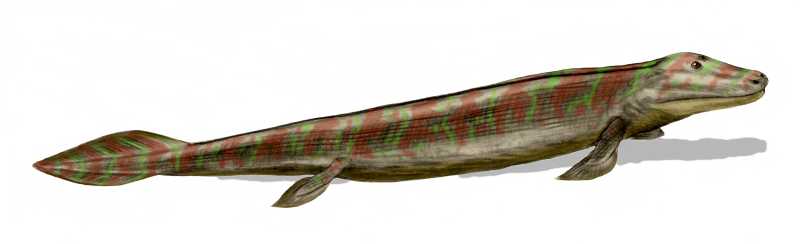
A transitional fossil between fish and amphibians.

Tiktaalik (pronounced /tɪkˈtaːlɪk/) is a genus of extinct sarcopterygian (lobe-finned) fish from the late Devonian period, with many features akin to those of tetrapods (four-legged animals).[1] It is an example from several lines of ancient sarcopterygian fish developing adaptations to the oxygen-poor shallow-water habitats of its time,[2] which led to the evolution of amphibians. Well-preserved fossils were found in 2004 on Ellesmere Island in Nunavut, Canada.

Tiktaalik lived approximately 375 million years ago. Paleontologists suggest that it was an intermediate form between fish such as Panderichthys, which lived about 380 million years ago, and early tetrapods such as Acanthostega and Ichthyostega, which lived about 365 million years ago. Its mixture of fish and tetrapod characteristics led one of its discoverers, Neil Shubin, to characterize Tiktaalik as a "fishapod" [3][4].

Labels:

Ken Miller on transitional fossits.


Dr. Ken Miller talks about the reality of transitional species as part of his two-hour talk about the Intelligent Design trial in Dover, Pennsylvania.

Labels:

FAQ of Transitional fossils.

We've often heard that there are no examples of transitional species in the fossil record. Kathleen Hunt at Talkorigins has put together a FAQ of transitional vertebrate species to answer these claims:
PART I has FISHES TO FIRST MAMMALS & BIRDS:
  1. Introduction:
    1. Types of transitions
    2. Why are there gaps?
    3. Predictions of creationism & evolution
    4. What's in this FAQ
    5. Timescale
  2. Transitions from primitive fish to sharks, skates, rays
  3. Transitions from primitive fish to bony fish
  4. Transition from fishes to first amphibians
  5. Transitions among amphibians
  6. Transition from amphibians to first reptiles
  7. Transitions among reptiles
  8. Transition from reptiles to first mammals (long)
  9. Transition from reptiles to first birds
PART 2 has transitions among mammals (starting with primates), including numerous species-to-species transitions, discussion, and references. If you're particularly interested in humans, skip to the primate section of part 2, and also look up the fossil hominid FAQ.
  1. Overview of the Cenozoic
  2. Primates
  3. Bats
  4. Carnivores
  5. Rodents
  6. Lagomorphs (rabbits & hares)
  7. Condylarths (first hoofed animals)
  8. Cetaceans (whales & dolphins)
  9. Perissodactyls (horses, rhinos, tapirs)
  10. Elephants
  11. Sirenians (dugongs & manatees)
  12. Artiodactyls (pigs, hippos, deer, giraffes, cows, etc.)
  13. Species transitions from other miscellaneous mammal groups
  14. Conclusion:
    • A bit of historical background
    • The major features of the fossil record
    • Good models & bad models: which theories match the data best?
    • The main point.
  15. References
SOURCE

Labels:

Monday, September 1, 2008

Food and its feelings.

Lately I've been reading a book by Marc Bekoff entitled "The Emotional Lives of Animals". In it he asks, "If you wouldn't do it to your dog, then why would you do it to another animal?".

This is a powerful posit. Marc makes an excellent case to show that animals display emotion, planning, deception, social contract, trust, mourning, and genuine love that can only be separated from humans more by degree than nature. This is bolstered by studies that show the same biochemical signatures in emotional responses of both animals and humans.

Concluding that we differ from other animals more in degree than kind seems to lead us to some ethical thinking: what moral distinction is there between eating your dog and eating your sheep, cow, pig, goat, chicken or monkey? In northeastern Asia, there really isn't much distinction made between dogs and cattle.

However, emotional and intelligent dolphins don't have any compunction about killing fish. Wolves and dogs will hunt. There is no natural morality which prevents one animal from eating another. Choosing not to eat meat is sometimes choosing not to harm an edible animal. This is not a uniquely human choice either. Occasionally, cats will adopt mice and snakes will adopt gerbils for companionship. People and great cats even have relationships.

Science is supporting what many pet owners and farmers already know.

Now we know that the differences between us and other animals are a matter of continuity rather than distinction. Perhaps our approach to producing food worldwide could adopt a philosophy of causing the least harm and suffering, with special consideration to establishing a sustainable balance between humans and all other species. The Buddhist philosophy seems most appealing to the sensitive soul where eating is concerned: strive to cause no suffering.

Animal populations are generally controlled by feasts and famines. Suffering and death is commensurate with population crashes that follow unrestrained population growth. We are aware of all of this and yet often behave as though we are ignorant of it. We are not likely to reach other worlds to live on to extend our population capacity.Dreams of space travel and terra-forming will not absolve us of establishing balance in a world where food becomes life, and life becomes food. We must develop a respectful approach to sustaining life in the garden. If we don't, we may be disappointingly reminded of the garden's limitations in blunt fashion.

To mitigate future hardship, we might jealously work to learn and preserve balance on our little oasis of life.

Labels: , ,